VCT
OpenAI says GPT-6 models can design proteins using only reasoning and code
In lab tests with Onava, proteins based on GPT-6.2 designs showed binding across five targets, according to OpenAI's preprint.
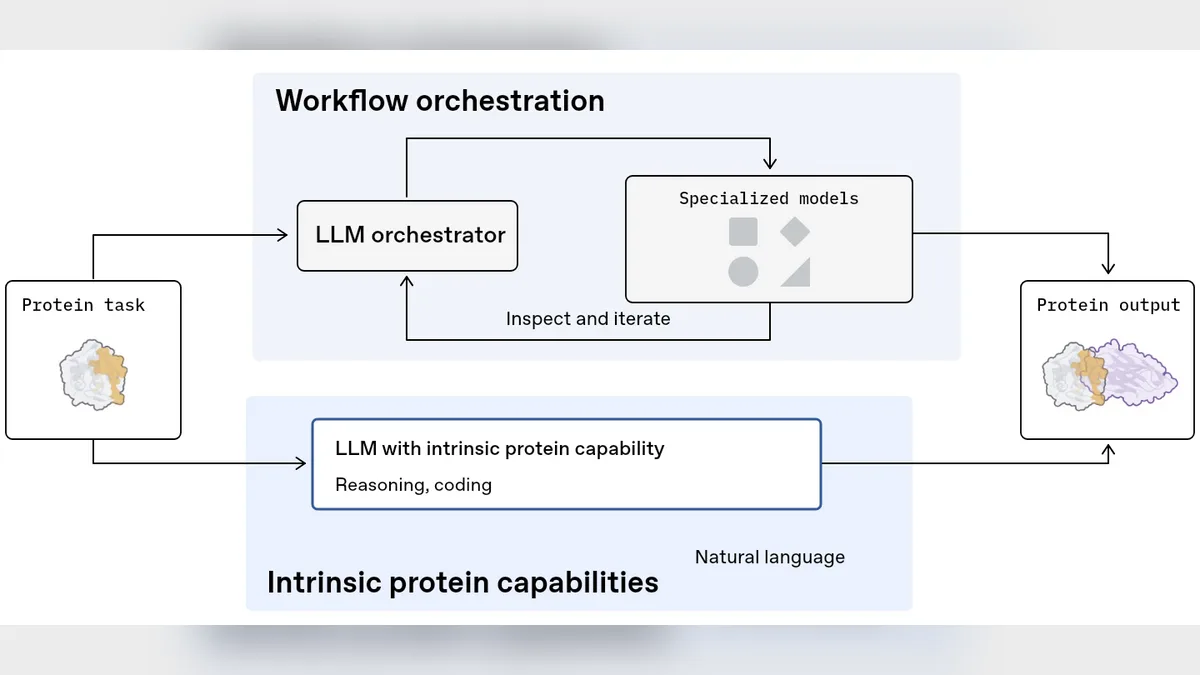
OpenAI says its GPT-6 models can design new proteins, both the three-dimensional shape and the amino acid sequence, through reasoning and general-purpose code alone. In lab tests with research partner Onava, proteins based on GPT-6.2 designs showed evidence of binding to five targets, according to the company's preprint.
According to OpenAI, an internal research model matched or beat specialized models on many protein design tasks. Researchers could steer designs through prompts, such as where a minibinder attaches and how many coils or strands it has. The company says full protein structure prediction stayed a clear weak spot.
OpenAI argues that coordinating specialized biology models takes substantial expertise, and that each one accepts only certain inputs. A general-purpose model can adapt to new instructions more easily, the company says.
What the lab tests showed
In the first experiment, OpenAI gave GPT-6.2 the structures of five target proteins and marked where a minibinder should attach. The model wrote code to draft the designs. Specialized models, including SolubleMPNN, suggested sequences and helped choose candidates. Of 322 minibinders tested, 35 (10.9%) bound their intended target. OpenAI notes that the original RFdiffusion study reported higher hit rates.
In a second experiment, GPT-6.2 proposed new sequences for existing minibinder structures. Binding appeared in 75 of 88 designs for MDM2, 26 of 42 for VEGF-A and 8 of 59 for PD-1. For three unpublished shapes, 14 of 107 proteins (13.1%) showed binding. OpenAI calls this strong evidence that the model's abilities go beyond memorization.
GPT-6.2 also redesigned binding loops on six small antibodies that target IL-4Rα. Of 182 designs, 128 (70%) showed signs of binding. For five therapeutic antibodies, 179 of 272 fragments (66%) bound the original target, PD-1 or PD-L1.