 VCT
OpenAI and Cisco open-source Shirudo to shield live Linux systems
Shirudo uses eBPF shields to block exploits on running systems while teams prepare permanent patches, according to the two companies.
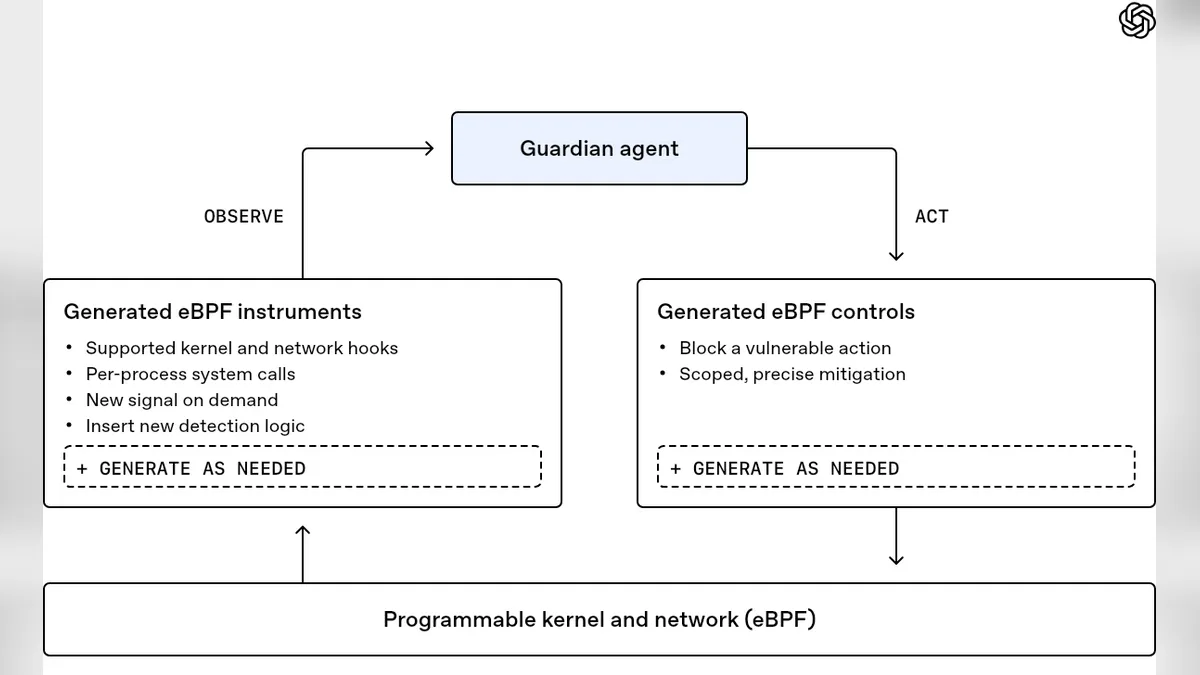
OpenAI and Cisco have launched Shirudo, an open-source runtime that shields Linux systems already running while patches are still being prepared. In a controlled test, a shield that Codex generated stopped a Java4Shell exploit attempt on a live Elasticsearch service, and the service kept running, the companies say.
Getting a patch tested and deployed can take days or weeks, the companies say. Protecting a service in the meantime is hard because an exploit and a valid request can depend on the same Linux operation. Blocking that operation outright might take the service offline.
Teams first test a temporary safeguard called a shield. The test checks whether it blocks the behavior behind the vulnerability while valid requests pass. Once an operator approves it, the shield can go live while the service keeps running. Shirudo relies on eBPF, a Linux technology that runs small programs at specific points inside the operating system.
Four capabilities
- Live protection: shields block vulnerable code paths without a restart, and teams can preview their effect first.
- Defense at machine speed: the companies are designing agent controls to investigate flaws, draft shields and test them against exploits.
- Trusted deployment: each shield carries a cryptographic signature that is checked before it loads.
- Hardware-backed verification: a Trusted Platform Module helps record when protections are loaded or removed, and operators can check that record.
The Java4Shell test
The team used Codex to generate a shield that adds an input check to Java's Base64 decoder. It attached the shield to a running Elasticsearch process. When the exploit was attempted, the shield rejected the malicious input and Elasticsearch kept running.
Shirudo uses the BSD 2-Clause license, with BPF programs dual-licensed under BSD and GPL. The companies say they want to publish tested shields with vulnerability disclosures, so operators can deploy temporary protections while patches are prepared.
Related stories
Cloud & Infrastructure
Microsoft pitches Copilot as the work operating system at Ignite 2026
Developer Tools
sqlite3_rsync copies SQLite database snapshots over SSH
Developer Tools